

Why the Slow Lane Rewards You Most
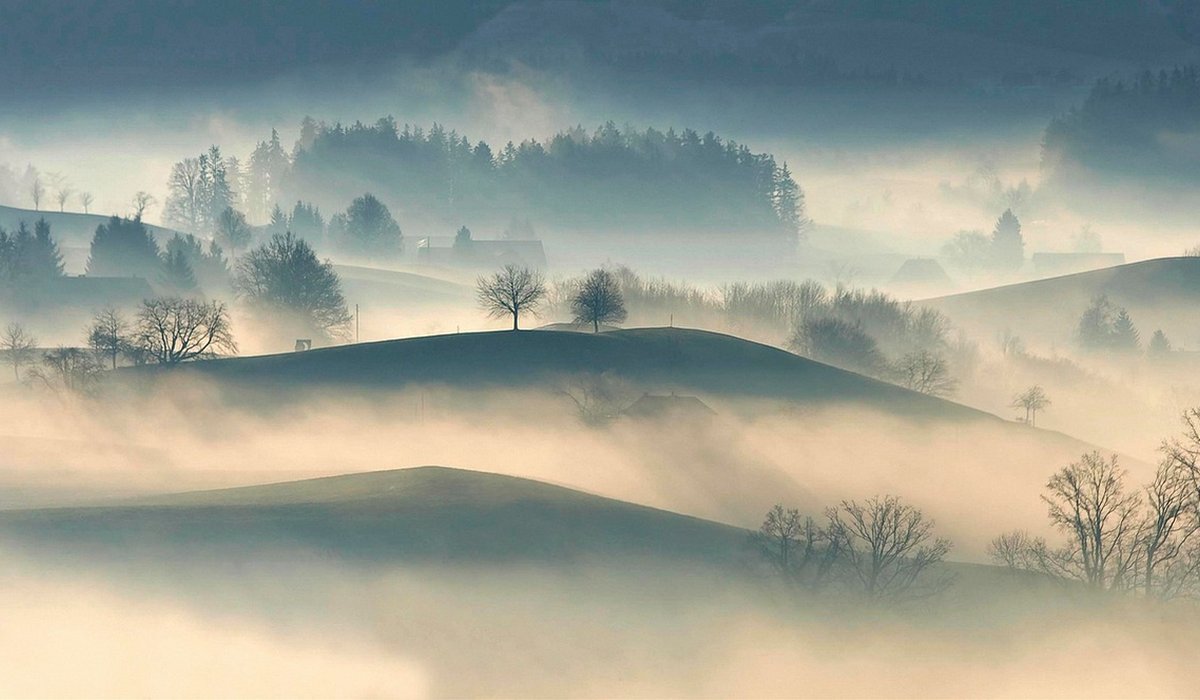
The quietest corners of the British countryside are rarely found on a summit or at a famous viewpoint. They are hidden in the lanes that thread between hedgerows, the footpaths that cut across a single field, the bridleways that follow an old drovers' route. Walking them slowly — three miles rather than eight, two hours rather than a race against dusk — changes what you notice. A wren scolding from a blackthorn hedge, the smell of rain on dry stone, a dew pond that appears on the map and nowhere else. Slow living isn't about doing less for the sake of it; it's about letting the landscape set the pace. These lanes have been walked at this speed for centuries, and they still suit it best.
Finding Lanes and Paths Worth Your Time
The trick is to look for the lines that go nowhere in particular. On a good paper map at 1:25,000 scale, these show up as broken green dashes, broken orange dashes, or thin unclassified roads curling between villages. Green dashes mean a public footpath: on foot only. Orange dashes mean a bridleway, open to walkers, horse riders and cyclists. Both are as much a part of the Queen's highway as the M1, and both are usually far quieter.
A few useful habits when you're planning:
- Follow water, not height. Streams, canals and old mill leats tend to run along gentle gradients with paths beside them.
- Look for "green lanes" — unmetalled byways with grass growing down the middle, often hedged on both sides.
- Start at a village, not a honeypot. Park considerately near a church or village hall, and walk out along the lane rather than driving to the trailhead.
- Aim for a loop of two to four miles on your first outing. A short walk with a bench halfway is worth more than a long one you rush.
- Use a paper map alongside your phone. Signal drops in wooded valleys, and a paper map never runs out of battery.
Reading Gates, Stiles and Rights of Way
Countryside furniture tells you a great deal. A wooden kissing gate usually marks a footpath crossing a field boundary. A stone stile set into a dry stone wall suggests a path that has been used for generations. Wide gaps or metal gates that swing both ways are often the sign of a bridleway, where cyclists and riders need room to pass. Where a path crosses a field, look for the waymark disc — usually yellow for footpaths and blue for bridleways — nailed to a post or gate.
If a path seems to vanish, walk to the far side of the field and look back. Waymarks are often placed for the return direction. If you are genuinely blocked by an obstruction, you are legally entitled to go around it via the edge of the field, rejoining the path as soon as you can. Do it quietly and without fuss; most obstructions are accidental.
Respecting Landowners, Livestock and Wildlife
Almost every path you walk crosses someone's livelihood. Farmers are, on the whole, remarkably tolerant of the public, and a little courtesy keeps it that way.
- Close every gate you find closed. Leave open gates open if they were open when you arrived.
- Keep to the path across crops and use the field margin where one is provided.
- Never block gateways, field entrances or passing places when parking. On single-track lanes, leave room for a tractor to get through.
- Give livestock space. Cattle with calves can be protective. Walk calmly and widely around them, and if you feel threatened, let your dog off the lead so you can both move away quickly.
- Keep dogs on a short lead around livestock and between March and July, when ground-nesting birds and young animals are vulnerable.
- Take everything home. That includes orange peel and apple cores, which are slower to disappear than people imagine.
If you meet a farmer, a nod and a "morning" costs nothing and buys a great deal of goodwill for everyone who walks after you.
What to Carry for a Gentle Day Out
Slow walking is low on kit and high on comfort. Waterproof boots you've already broken in, a spare pair of socks, and a light pack are the essentials. Add a flask, something to sit on — a folded square of foam weighs nothing and turns a damp stile into a picnic bench — and a small bag for litter. In summer, long trousers tucked into socks are the simplest defence against ticks in long grass. In winter, gaiters keep the mud out of your boots where lanes turn to slurry. A stick helps on wet chalk and clay, and gives you something to lean on while you watch a buzzard quartering a field.
Making a Slow Habit of It
The pleasure of these lanes deepens with repetition. Choose one stretch near home and walk it in every season. The same hedge in April is blackthorn blossom and chiffchaff; in October it is sloes, hips and a flush of fieldfares. Go without headphones for the first mile. Sit down at the halfway point, even if it's only for five minutes. Note the gate you struggled with last time, the oak that lost a limb in the gale. Leave the car behind when you can, walk from your own door, and let a two-mile loop become the fixed point of a week. That, more than any long-distance route, is what slow living in the countryside actually looks like.



John Doe
14 January, 2022Having no content in post should have adverse..
Chauffina Carr
10 April, 2022We use these tests all time! Killer stuff!
Jim Séchen
16 July, 2022Thanks for all the comments, everyone!